01 — Ocean
The ocean is not big enough
We were told the ocean was too vast to ruin. It took roughly seventy years to disprove that.
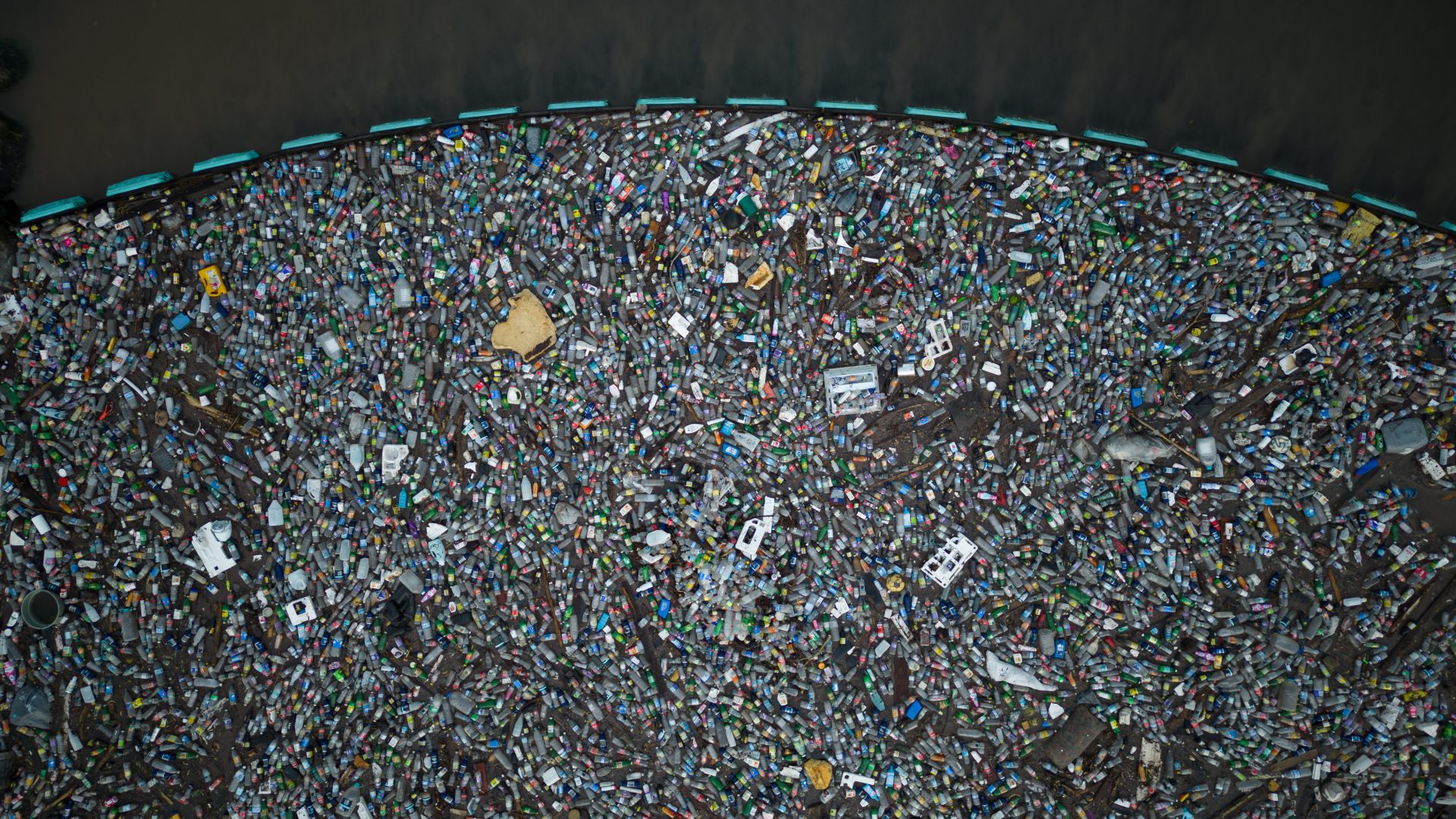
Global plastic production runs at over 400 million tonnes a year and is still climbing. An estimated 8 to 11 million tonnes of it reaches the ocean annually — a figure that sounds abstract until you stand on a remote beach that nobody visits and find it lined with bottle caps.
Most of it doesn't arrive by ship. It arrives by river. A relatively small number of rivers, running through dense population centres without waste infrastructure, carry the large majority of plastic that reaches the sea. That matters enormously, because it means the problem has chokepoints — specific, findable places where a barrier or a collection crew intercepts waste before it disperses into two thirds of the planet.
Once plastic is out at sea it fragments. Sunlight and salt break bottles into flakes, flakes into microplastics, and microplastics into something you cannot filter out of anything. It's in fish, in salt, in rain, in us. The Great Pacific Garbage Patch is not an island of bottles you could photograph — it's a soup roughly three times the size of France, mostly invisible from a boat deck.
There is no technology that un-fragments a microplastic. Which is why almost everything worth funding happens upstream of the damage: stop it at the river, or collect it while the pieces are still big enough to catch.
400M+
tonnes of plastic produced globally each year
~11M
tonnes estimated to enter the ocean annually
1.6M km²
surface area of the Great Pacific Garbage Patch
Where the money goes
The Ocean Cleanup
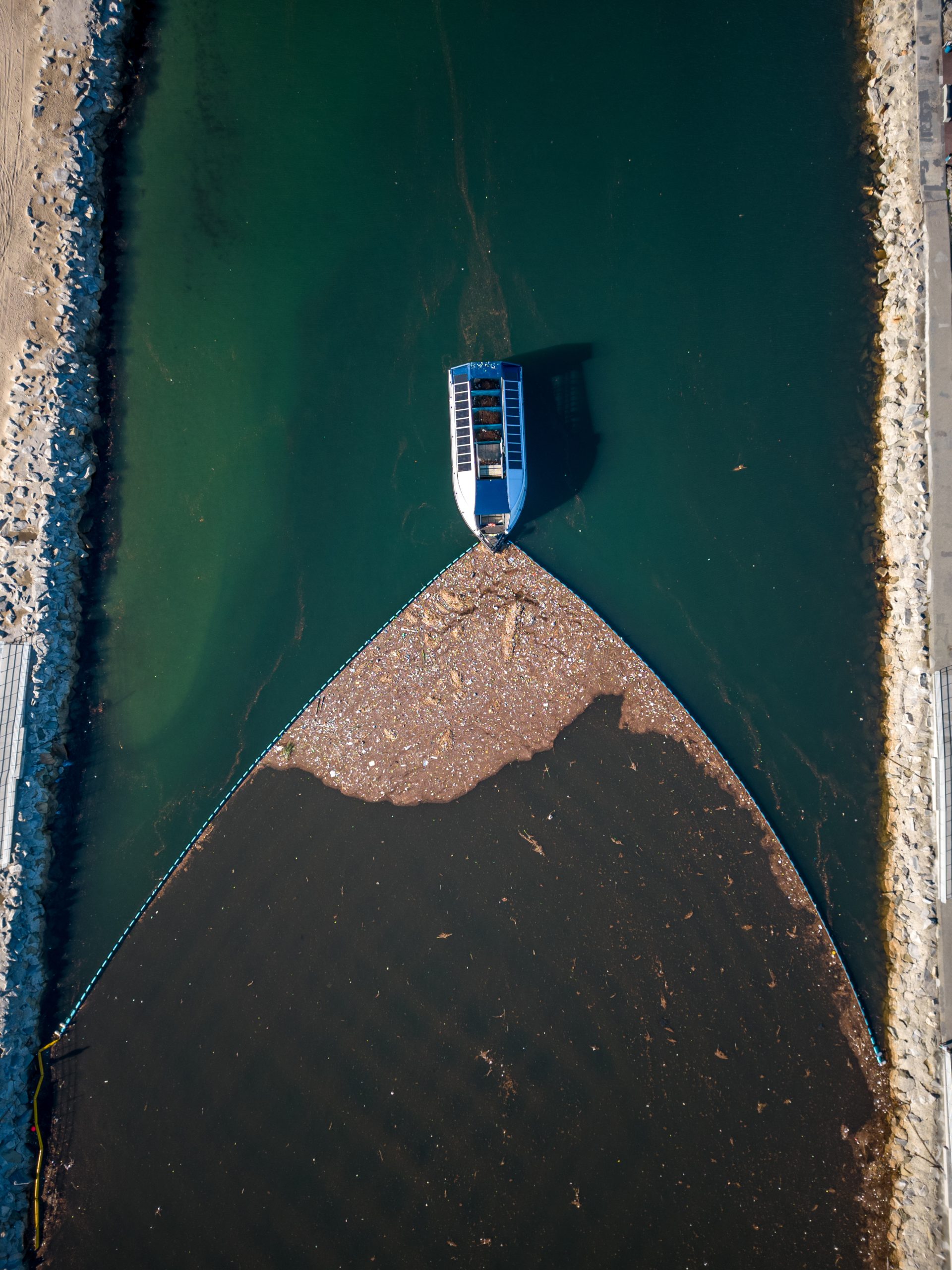
A Dutch engineering non-profit doing two things at once: extracting accumulated plastic from the Great Pacific Garbage Patch with ocean systems, and installing Interceptors — solar-powered barges — in the rivers that emit the most plastic, from Southeast Asia to Central America.
Why themBecause they are engineers before they are campaigners. Every deployment publishes tonnage, coordinates and cost, and they went after the river chokepoints the moment the data said rivers mattered more than mid-ocean. That willingness to follow their own numbers, even when it undercut their original mission, is the most reliable signal of a serious organisation.
Ocean Conservancy
Runs the International Coastal Cleanup, the longest-running volunteer cleanup effort in the world — millions of volunteers across more than a hundred countries, every item logged into a public database. That database is what tells the rest of the field which products are actually washing up.
Why themThey fund the part nobody puts on a poster: measurement and policy. Cleanups alone don't win — knowing that a specific category of packaging dominates the world's beaches is what changes what gets manufactured. We pay for the boring half deliberately.
02 — Rainforest
Nothing replaces old forest
A planted sapling is not a substitute for a canopy that took four hundred years to close.
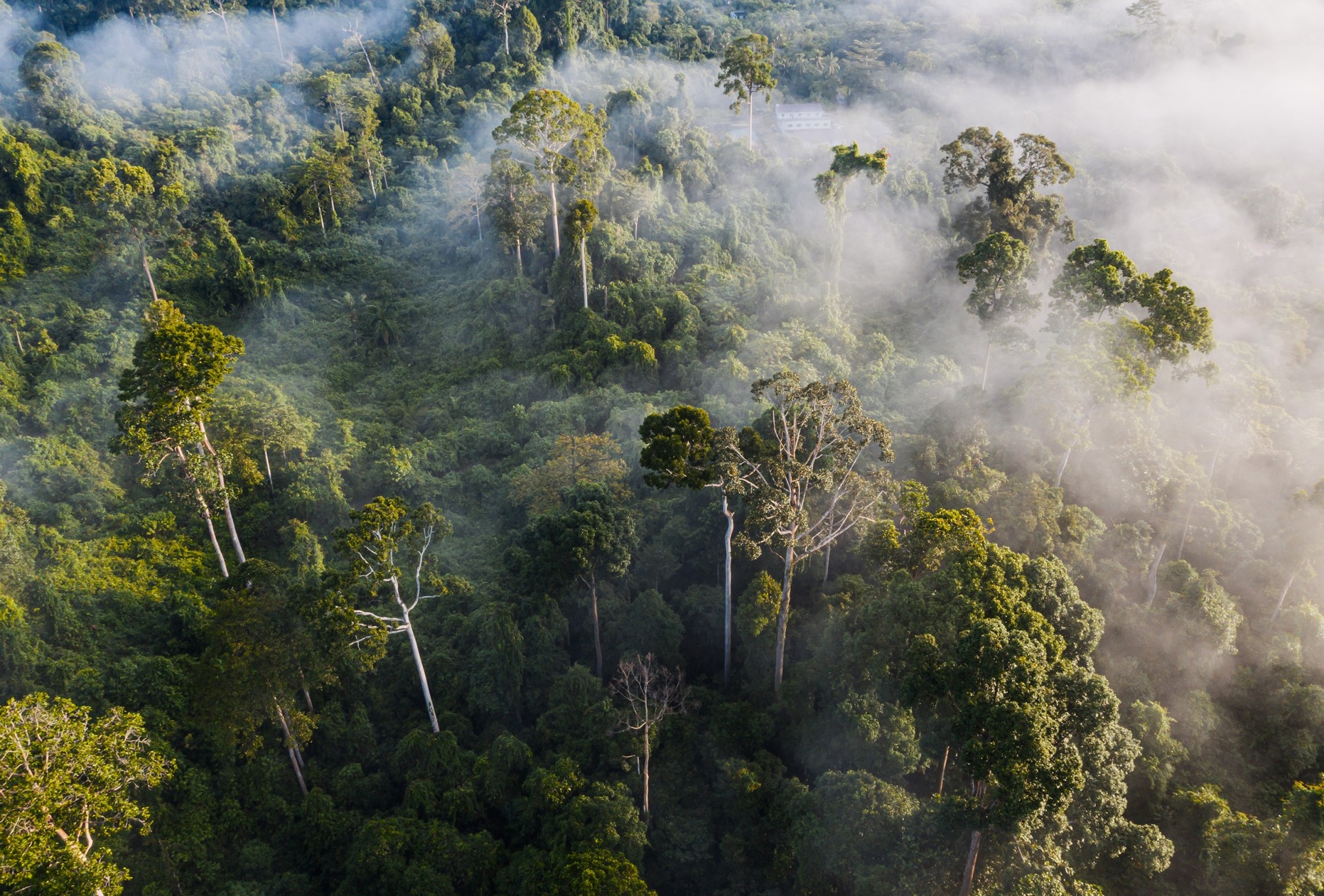
The tropics lose in the order of 3 to 4 million hectares of primary rainforest every year. Reported as a rate, that's a football pitch of irreplaceable forest gone every few seconds, continuously, while you read this page.
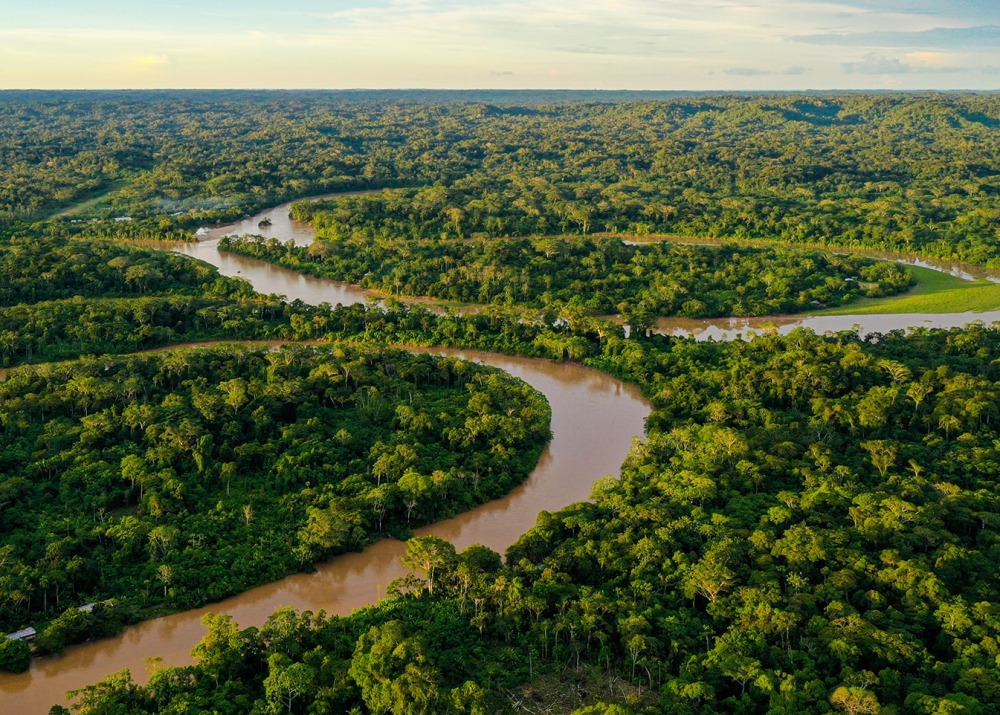
Rainforests hold roughly half the world's known species on about six percent of its land surface. They also run the water cycle for entire continents — the Amazon generates much of its own rainfall by recycling moisture through its own trees. Cut enough of it and the system stops raining on itself. Scientists studying that feedback loop put the tipping point somewhere around 20 to 25 percent deforestation, and the Amazon is already close to the bottom of that range.
The bleak arithmetic behind conservation funding is this: protecting standing forest costs a fraction of restoring cleared land, and unlike restoration, it works immediately. A protected hectare keeps its carbon, its species and its hydrology on day one. A replanted hectare is a promissory note against a century of successful management.
Land that is legally titled and locally stewarded — particularly by indigenous communities already living in it — is the most durable protection anyone has measured. Not fences. Deeds.
~3.7M ha
primary tropical forest lost in a recent single year
50%
of known species live in rainforest
6%
of Earth's land surface is rainforest
Where the money goes
Rainforest Trust
Buys and legally protects threatened tropical land in partnership with local conservation organisations, then places it under permanent protection — usually with the communities already living there as its stewards. Tens of millions of acres safeguarded to date.
Why themBecause the output is a legal document with GPS coordinates, which is about as traceable as charity gets. They also operate a model where project donations go entirely to conservation rather than overhead, and the acres are published. When a contribution results in a specific parcel of land that can be pointed at on a map, there is very little room for anyone to exaggerate.
03 — Animal Welfare
The suffering nobody photographs
This is the cause Max earned. He was somebody's patient for nine years, and he was treated kindly every time.
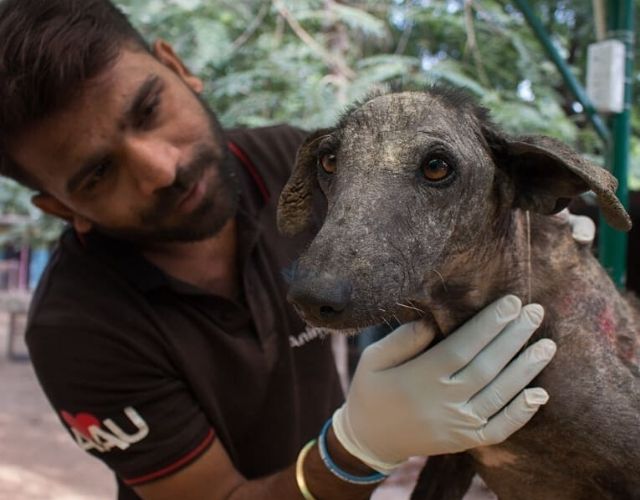
Start on the street. The WHO estimates more than 200 million stray dogs worldwide, and welfare organisations put stray cats higher still — animals that are born, get sick, get injured and die without ever having anyone responsible for them. Almost nobody funds their medical care, because they belong to no one.
Then the farms: tens of billions of land animals are raised each year, the overwhelming majority in intensive confinement systems designed around throughput rather than the animal. Add an estimated 115 million animals used in laboratory experiments annually — a figure that is itself uncertain because much of the world does not require anyone to count — plus wildlife trafficked at industrial scale, working animals driven past exhaustion, and pets abandoned when they become inconvenient. The common thread is that the suffering is legal, routine and invisible.
What makes this cause unusual is how little it costs to move. Very little philanthropic money goes to animal welfare relative to the number of animals affected, which means the marginal donation still buys extraordinary leverage — a street hospital in one country, a corporate policy commitment in another, testing methods that don't require an animal at all.
A single successful corporate campaign can improve conditions for more animals than a lifetime of individual rescue — and a street hospital saves the specific animal in front of it. We fund both, because both matter, and we do not pretend they are the same size.
200M+
stray dogs on the world's streets (WHO estimate)
Tens of
billions
land animals farmed each year worldwide
<1%
of philanthropic giving directed to animal welfare
Where the money goes
Humane World for Animals
One of the largest animal protection organisations in the world, working across rescue and disaster response, ending cosmetic animal testing, ending puppy mills, and reforming farming practice — with campaigns running in dozens of countries simultaneously.
Why themBreadth. They are one of very few organisations that can pull a legislative lever in one country, run a rescue operation in another, and fund the science that makes an animal test unnecessary in a third. When a cause is under-funded across the board, an organisation that can push on all of it at once is worth more than a specialist.
The Humane League
Runs targeted corporate and legislative campaigns to end the worst practices in industrial animal farming — cage-free commitments, better broiler standards — and publishes progress on whether companies actually honour what they signed.
Why themCost-effectiveness, honestly assessed. They are consistently rated among the highest-impact animal charities by independent evaluators, because a single policy change affects millions of animals for the price of a campaign rather than the price of a shelter. They also chase companies that quietly miss their deadlines, which is unglamorous and the entire point.
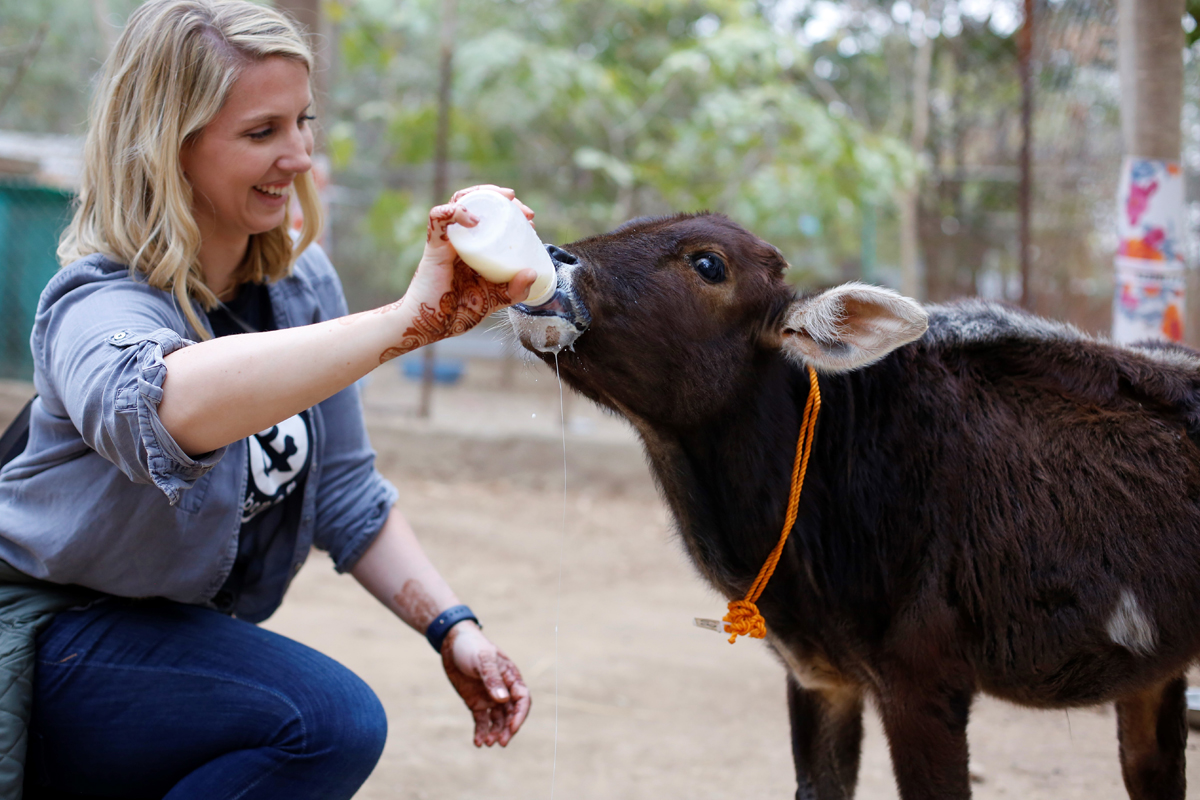
Animal Aid Unlimited
Runs a hospital, rescue operation and sanctuary for street animals in Udaipur, India — dogs, cows, cats and donkeys who are sick, injured or dying with nowhere else to go. They rescue and treat over 20,000 animals a year.
Why themBecause most animal suffering isn't in a lab or a farm, it's on a street, and almost nobody funds that. They hold a 4-star rating from Charity Navigator with independently audited financials, and every rescue is documented — you can watch the treatment, not just read a statistic about it.
04 — Clean Water
The most solvable problem on Earth
Nobody needs to invent anything. The engineering was finished a century ago.
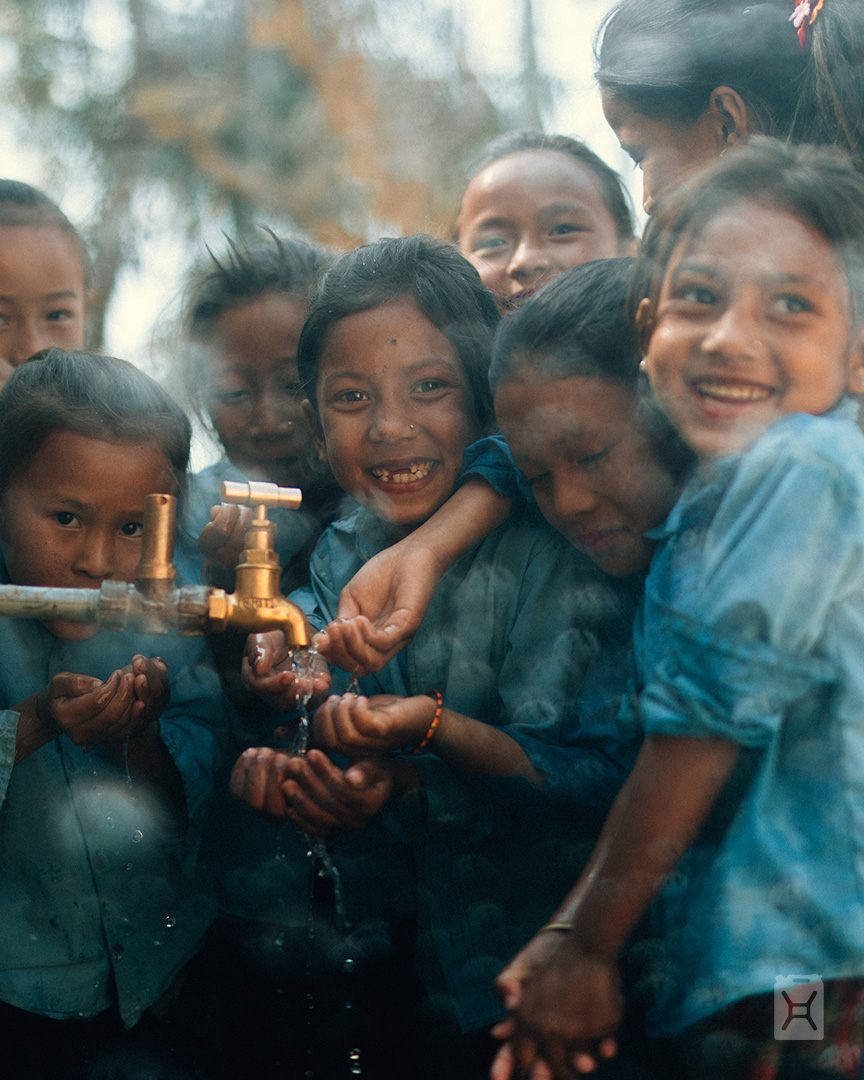
Around 2.2 billion people lack safely managed drinking water, and roughly one in ten has no basic access at all. The consequences are not exotic: waterborne disease remains one of the leading causes of death in children under five, and it is caused by something a filter and a borehole fix permanently.
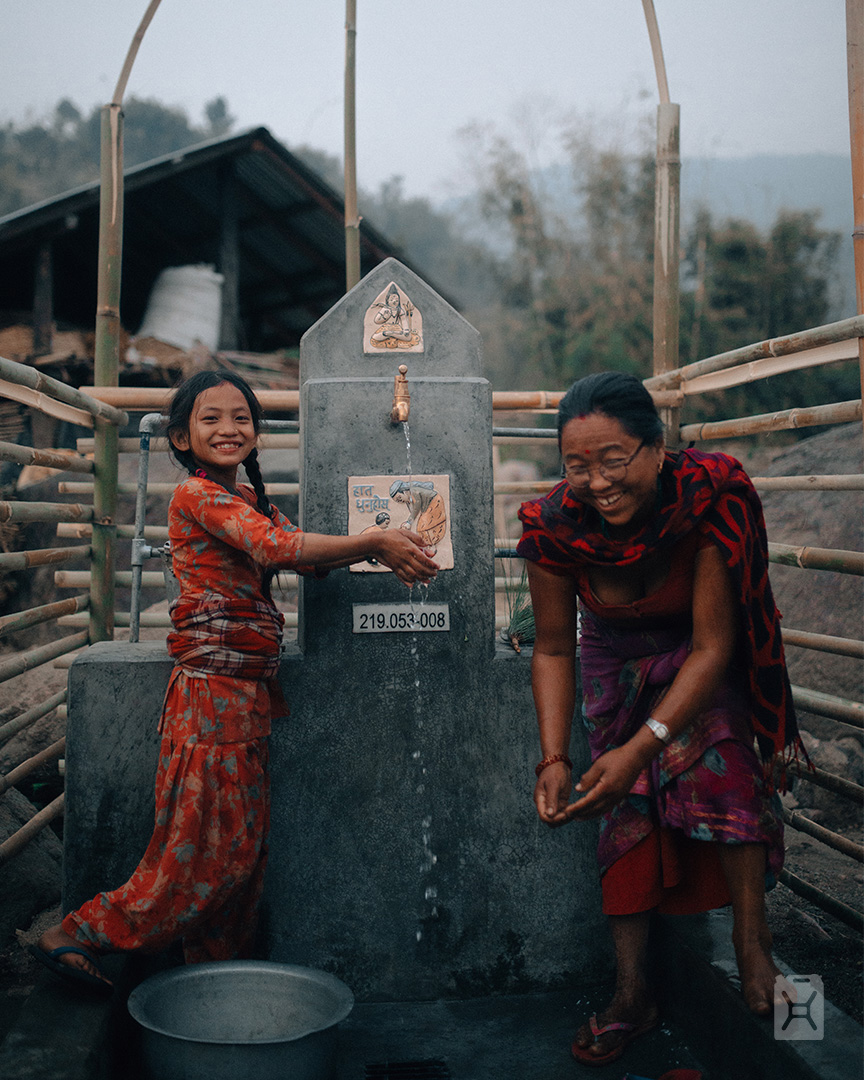
The second cost is time. Where there is no nearby water source, collecting it is unpaid labour, and it falls overwhelmingly on women and girls — collectively hundreds of millions of hours a day walking to a source and back. Those are hours not spent in a classroom or earning an income. Install a well within walking distance and you have not only prevented disease, you have handed a village back its own working day.
This is the cause we fund with the least agonising, because it is the rare global problem where the only missing ingredient is money. No breakthrough required, no political consensus, no behaviour change. Roughly forty dollars puts clean water within reach of one person for the rest of their life. A t-shirt company can generate that.
2.2B
people without safely managed drinking water
1 in 10
people with no basic water access at all
~$40
approximate cost of clean water for one person, for life
Where the money goes
charity: water
Funds water projects across Africa, Asia and Latin America through local implementing partners, and installs remote sensors on completed wells so failures are detected instead of quietly ignored. Every project is published with GPS coordinates and photographs.
Why themTwo reasons. Their 100% model means public donations go to water projects while operating costs are covered separately, so the money you contribute is not diluted by explanation. And the sensors — an organisation that instruments its own past work in order to catch its own failures is telling you something true about how it operates. Most charities show you the ribbon-cutting. These ones check whether the well still runs in year seven.
05 — Children & Education
The only donation that compounds
Every other cause on this page becomes cheaper to solve when the next generation can read.
Around 250 million children and young people are out of school. But the deeper crisis is the children who are in school and still can't read: in low-income countries, the large majority of ten-year-olds cannot read and understand a simple story. A classroom without a teacher, a book or a language the child speaks is attendance, not education.
The returns are unusually well documented. Each additional year of schooling measurably raises lifetime earnings, and the effect carries into the next generation — educated girls in particular go on to have healthier, better-educated children, which is why girls' education keeps appearing at the top of development-economics rankings.
Conflict and displacement are now the largest single driver of children losing school entirely. Which means the education budget and the humanitarian budget are not separate problems: keeping a child in school during a crisis is often the intervention that prevents a decade of lost ground.
~250M
children and youth out of school globally
~10%
estimated lifetime earnings gain per extra school year
Majority
of 10-year-olds in low-income countries cannot read a simple story
Where the money goes
UNICEF
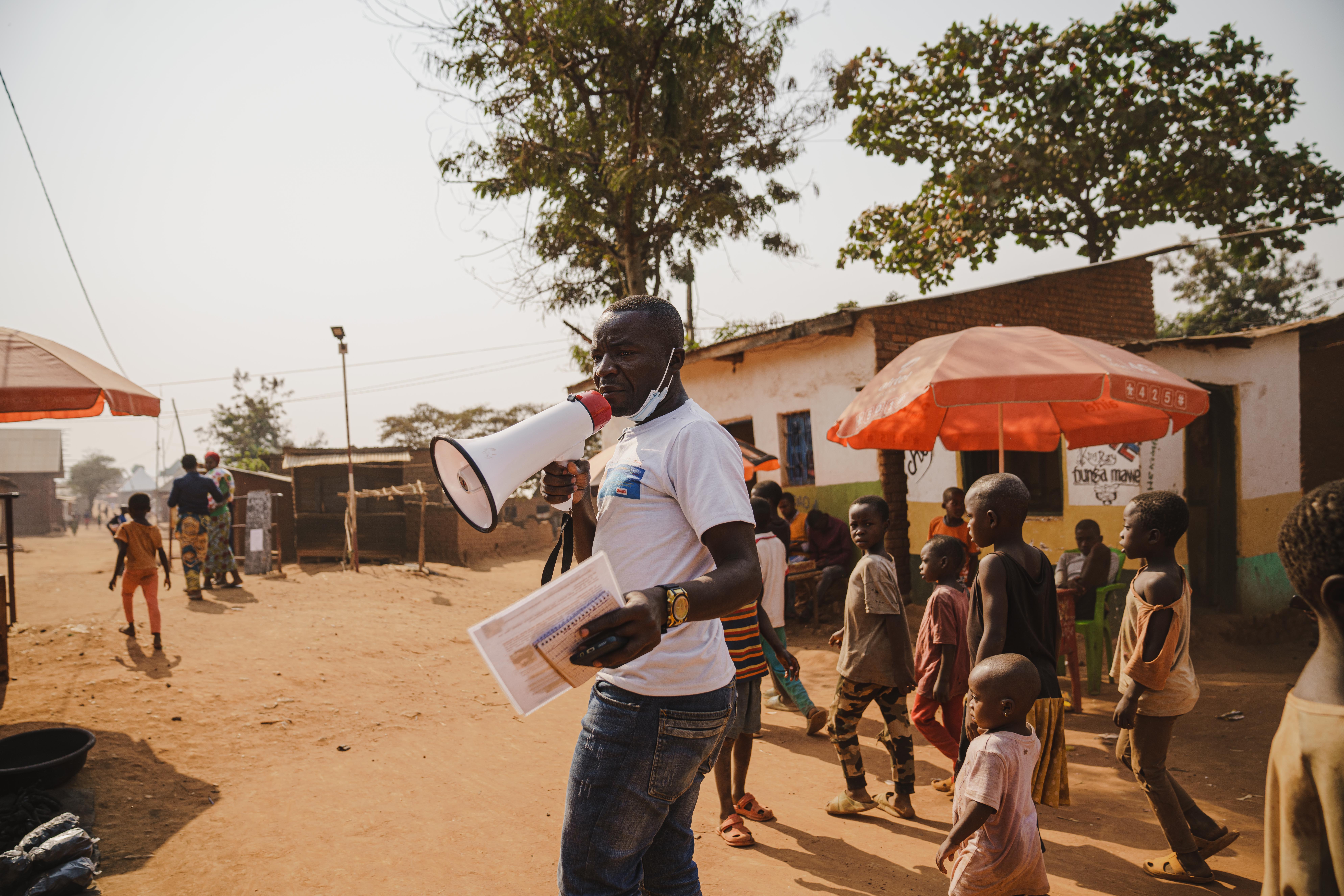
Works in more than 190 countries on children's health, nutrition, protection and education — and is one of the only organisations with the mandate and logistics to keep schooling running inside an active emergency.
Why themReach that nobody else has. When a crisis displaces a hundred thousand families, the question is not who has the best programme design, it's who is already there with supply chains and government access. We earmark contributions to education specifically so scale doesn't turn into vagueness.
Save the Children
Operates in around 100 countries across education, child protection, health and emergency response, with a century of work specifically on children caught in conflict and disaster.
Why themThey hold the line where education is most likely to disappear — refugee settlements, conflict zones, post-disaster regions. Funding a school in a stable country is comparatively easy; funding one that survives displacement is where the money is genuinely hard to replace.
Room to Read
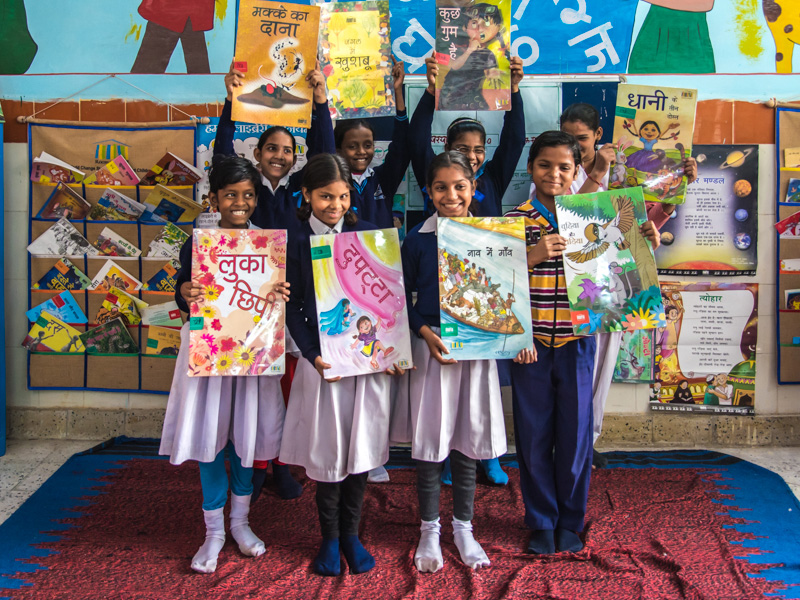
Focuses narrowly on two things: children's literacy in primary school, and keeping girls in secondary education with mentoring and life-skills support. Libraries, local-language books, teacher training, measured reading outcomes.
Why themBecause they attack the failure the other two can't specialise in — the child who attends school for six years and still can't read. Narrow scope, measured outcomes, published results. Alongside two organisations built for scale and crisis, this is the one built for whether it actually worked.